




A furnished 54 m² apartment in Iancului was advertised at €90,950 in a thermally rehabilitated 1977 block, with the seller stating “no seismic risk”. The kitchen was ready. The building question was not.
Die PFC Immobilieninvestor-Index 2026Q3 ranks Bucharest first in the Current Investment Case. This 19-listing test asks what that city-level advantage actually means at a €100,000 ceiling.
Bucharest still offers usable two-room apartments at this price, especially outside the prime centre. Yet the decisive question is often not whether the flat looks ready for a tenant. It is whether the block, title file and condominium can withstand proper due diligence.
What the live sample found
Place for Capital checked 19 current asking listings priced at or below €100,000 on 30 October 2026. The sample covered Titan, Apărătorii Patriei, Iancului, Drumul Taberei and Berceni. Fifteen listings were advertised as furnished, maintained, completed or otherwise ready to occupy. Four clearly required renovation.
At the European Central Bank reference rate on 29 October 2026, €100,000 was about $111,300.
The median asking price was €92,000. Median usable area was 51 m² and the median asking price was €1,818 per m². These are listing figures, not completed transaction prices.
The chart shows that €100,000 still reaches a real one-bedroom or local two-room format in several metro-connected districts. It does not buy a uniform product. The sample ranged from a renovated 39 m² Berceni apartment at €83,500 to a furnished 55 m² Titan apartment at €99,500 and a 56 m² 2023 property in Apărătorii Patriei at €94,900.
Sample note: this is a dated asking-price snapshot of visible two-room homes, not a market census or transaction-price series. Apparent duplicates and one listing with an ambiguous city location were excluded.
The city benchmark helps, but it is not a €100,000 promise
The city scores 87.70 in the Current Investment Case. Its standardised €250,000 buying-power benchmark equals 103.3 m² and its vacancy-adjusted gross yield benchmark is 4.60%.
Data collection period: July–September 2026.
The city benchmark explains Bucharest’s relative affordability, but it does not predict a €100,000 deal. This later sample covers specific districts and building types.
The renovation route left less, not more, budget room
The median rental-ready listing asked €91,500, leaving €8,500 below the headline budget. The median renovation listing asked €92,450, leaving €7,550. The renovation group left €950 less, not more.
That is the less obvious finding. In this snapshot, choosing a visible renovation project did not create a cash reserve. The remaining amount still had to cover legal work, registration, possible agency fees, technical checks, furnishing and repairs. A lower finish standard was not automatically a better-value investment.
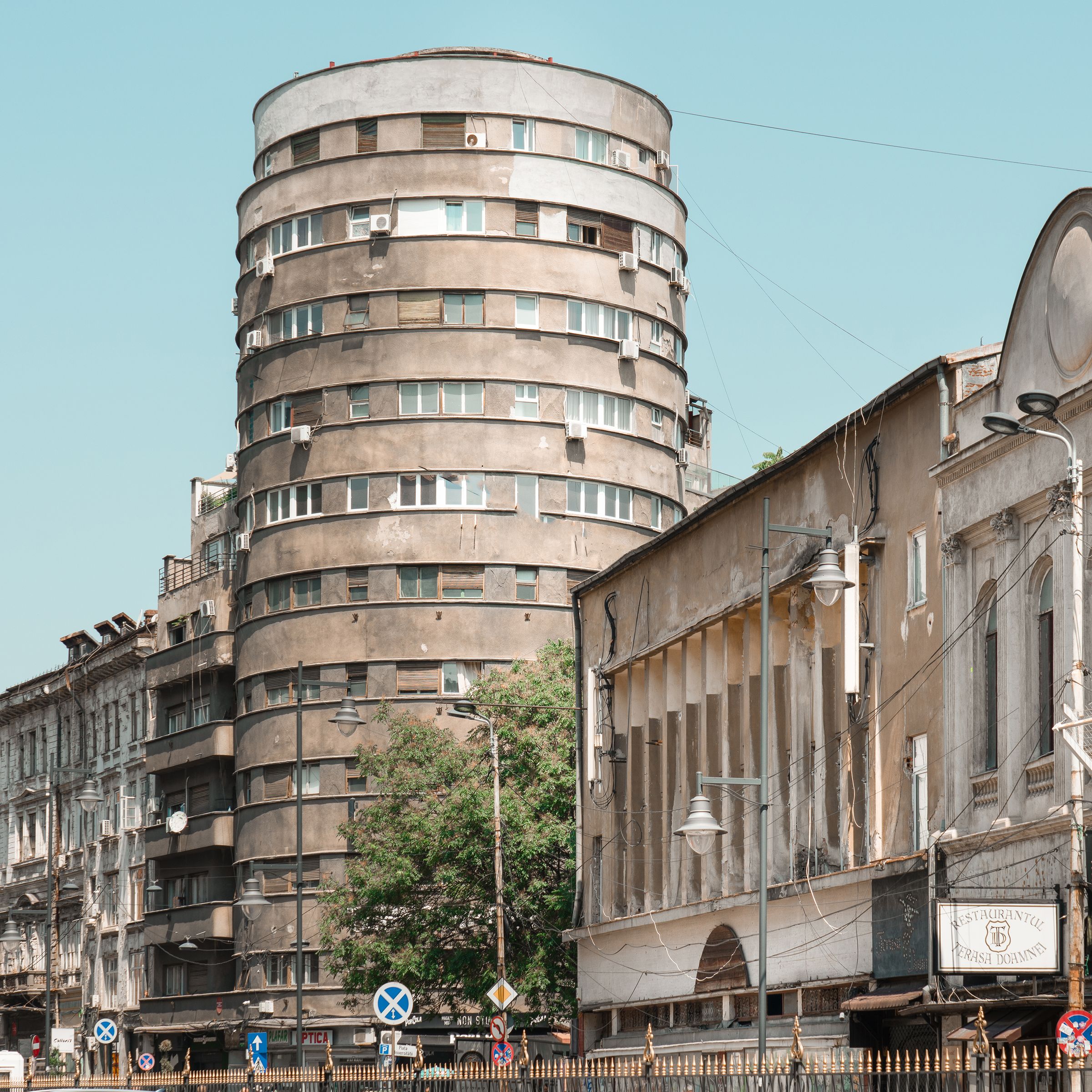
The memorable Bucharest trap is the block, not the sofa
Bucharest maintains an official address-level register of technically assessed buildings through the Municipal Administration for the Consolidation of Seismic Risk Buildings. A buyer should search the exact address and obtain the underlying expert report where one exists.
Absence from the list does not prove that a building is safe. It may mean that the building has not been assessed or recorded. A listing statement such as “no seismic risk” should therefore trigger a document request, not close the question.
The same logic applies beyond seismic status. Check the construction year, structural system, unauthorised alterations, roof and lift liabilities, arrears in the owners’ association, planned capital works and whether the apartment’s cadastral plan matches reality.
The asking-price scatter reinforces the point. Older blocks appeared at both the low and high ends of the sample’s price-per-square-metre range, and a polished interior did not remove the building-level question. Construction year is not a safety rating. It is a prompt to inspect the right evidence.
€100,000 should not be treated as the asking-price budget
Romania does not charge a buyer-side transfer tax on a direct real estate asset purchase. The buyer normally pays the notary and Land Book registration costs. The Land Book registration fee for an individual is 0.15%, while the notary fee follows a regulated tariff and depends on the value used for the deed. The Romanian notaries’ guidance also lists documents such as the title, cadastral record, fiscal certificate, owners’ association certificate and energy certificate.
The Index uses a 1.1323% mandatory entry-cost benchmark at €250,000 for city comparison. A €100,000 deal needs its own tariff-based notary quote plus any agency, lawyer, survey and repair costs.
VAT treatment also needs a direct question. A private resale and a developer sale may not be advertised on the same basis. Confirm whether VAT is included before comparing two headline prices.
What about rent, Airbnb and tax?
The 4.60% figure is a vacancy-adjusted gross yield benchmark. It is before operating costs, tax, finance, major repairs and one-off acquisition costs.
Short-term letting can require tourism classification, tax registration, guest records and building or neighbour approvals. Underwrite long-term rent until those permissions and costs are verified.
A practical €100,000 checklist
- Search the exact building address in the official seismic register and ask for the expert report.
- Reconcile the title, cadastral plan, measured area and any internal alterations.
- Obtain the owners’ association certificate and ask about arrears, roof, façade, lift and heating liabilities.
- Compare the asking price with a written renovation and furnishing scope.
- Keep acquisition and repair cash outside the seller’s headline price.
- Underwrite long-term rent first. Treat short-term letting as a separate regulated business case.
This search is most relevant to a cash buyer who accepts an older apartment block, wants a conventional one-bedroom rental and can carry out address-level due diligence. It is less suitable for an investor who needs a central new build, a fixed all-in €100,000 ceiling and no technical or renovation uncertainty.
The answer
€100,000 can still buy a rental-ready Bucharest apartment. The live evidence is strongest in established, transport-connected districts rather than the prime centre. The practical edge is to stop treating finish quality as the main definition of “ready”. Tenant-ready is not investment-ready until the block is verified.
Methodology note: the city benchmark and the dated listing test answer different questions. See the PFC Property Investor Index methodology for the comparison framework.