

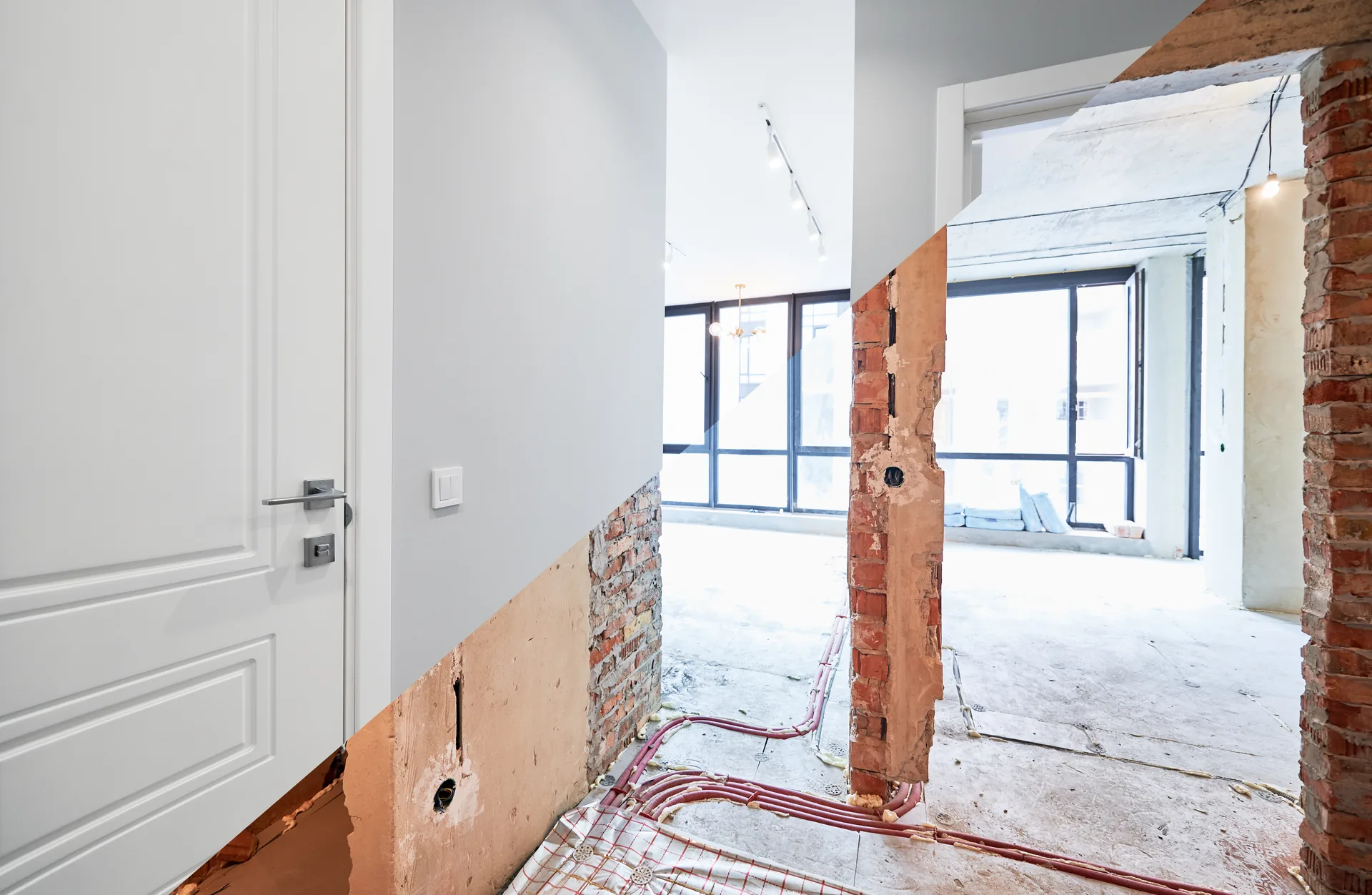
One offers operational certainty. The other can offer location, income and value that the market has not fully unlocked.
Research date: 27 September 2026
Two apartments are listed at almost the same total budget. One is a compact new build with efficient systems, a warranty and no renovation schedule. The other is larger, sits on a stronger street and needs six weeks of work before the first tenant moves in.
The new apartment feels easier. The existing one may produce more rent and renovation upside. Both can work because property combines income, capital growth and active value creation.
In Brief
- New builds exchange a price premium for lower near-term maintenance, better energy performance and simpler letting.
- Existing properties can offer established locations, larger floor areas and value creation through renovation or better management.
- The right comparison uses the full cost to reach a lettable standard, not the advertised purchase price alone.
- A strong property in either category can combine rental income, capital growth and active value creation over a long holding period.
The Choice Is Really About How Value Is Created
A new build asks the investor to pay more today for a building that should need less intervention tomorrow. An existing property often asks the investor to accept more work in exchange for a better entry price, a proven location or a larger asset.
Age alone decides nothing. A new apartment bought at an inflated price can be weak, as can an older home with poor layout and uncontrollable building costs. The useful question is whether price, rent, condition and future buyer demand support the investment case.
| Investment feature | New build | Existing property |
|---|---|---|
| Entry price | Often includes a developer and efficiency premium | May offer a discount for age or condition |
| Income start | Usually quick after handover and furnishing | May be delayed by renovation |
| Near-term maintenance | Usually lower and more predictable | More dependent on survey quality and building condition |
| Value creation | Mostly through market growth and asset selection | Can include renovation, layout and management improvements |
| Location | Often in expanding districts | Often available in established central areas |
| Energy profile | Designed to newer standards | Can range from inefficient to fully upgraded |
New Builds Buy Operational Certainty
A well-delivered new build removes several unknowns. Modern insulation, efficient systems and new common areas can reduce early maintenance, simplify letting and help the building remain competitive as energy standards tighten.
The direction of European policy supports that advantage. The European Commission states that all new buildings will have to meet the zero-emission standard from 2030, with limited exemptions. It also notes that a zero-emission building can use about ten times less energy than a worst-performing building. Lower energy exposure can protect tenant affordability and future resale demand.
The premium still needs discipline. Test the developer, payment schedule, specification, service charge and local supply pipeline. Low maintenance is valuable, but the purchase should not rely on perfect capital growth.

Existing Homes Buy Location and Optionality
Existing housing often provides what development sites cannot: mature neighbourhoods, transport, services and a long record of tenant demand. The investor can inspect the actual building, compare achieved rents and see how the street functions at different times of day.
Condition risk can become an advantage when priced correctly. A dated interior may deter owner-occupiers while giving an investor a route to higher rent. Renovation turns capital and execution into equity, a degree of control that passive financial assets do not offer.
A Five Year Comparison Starts With the Real Cost
Consider two illustrative purchases. The figures are not market forecasts. They show why the comparison should begin only after each property reaches a lettable standard.
| Illustrative input | New build | Existing property |
|---|---|---|
| Purchase price | EUR 300,000 | EUR 250,000 |
| Furnishing or renovation | EUR 5,000 | EUR 50,000 |
| Total cost before tax and finance | EUR 305,000 | EUR 300,000 |
| Stabilised annual net operating income | EUR 10,700 | EUR 13,200 |
| Illustrative net yield on cost | 3.5% | 4.4% |
| Main return engine | Low disruption and future resale quality | Income plus value created through improvement |
The existing property appears stronger in this example because the renovation is controlled and the improved rent is realistic. If the work costs EUR 70,000, takes six months or fails to lift rent, the gap can disappear. The new build can justify its lower starting yield when it preserves time, reduces surprises and remains liquid to future buyers.
When Each Option Makes More Sense
- Choose a new build when energy performance, low maintenance and a simple first letting matter more than maximising initial yield.
- Choose an existing property when the location is stronger, the discount is real and the renovation can be priced and managed with confidence.
- Reject either option when the investment works only under optimistic rent, zero vacancy or rapid price growth.
Compare purchase costs, time before rent and realistic operating expenses before modelling finance. Our guide to buying property with cash or a mortgage explains how leverage changes both return and risk.
The Better Property Is the One With the Clearer Return Engine
New builds and existing properties solve different investor problems. One can protect time and operating certainty. The other can convert judgement and renovation into income and equity. The stronger investment is the asset whose advantage is visible in the numbers before purchase and still useful to tenants and buyers years later.
Property gives the investor more than one way to win. The age of the building determines where that value can be created, not whether the investment can work.
Get Place for Capital’s European property analysis in your inbox. We focus on the markets, strategies and long-term forces behind better real-estate decisions.
This article is for general educational purposes. It is not personalised financial, tax, lending or legal advice.