
 English
 Deutsch

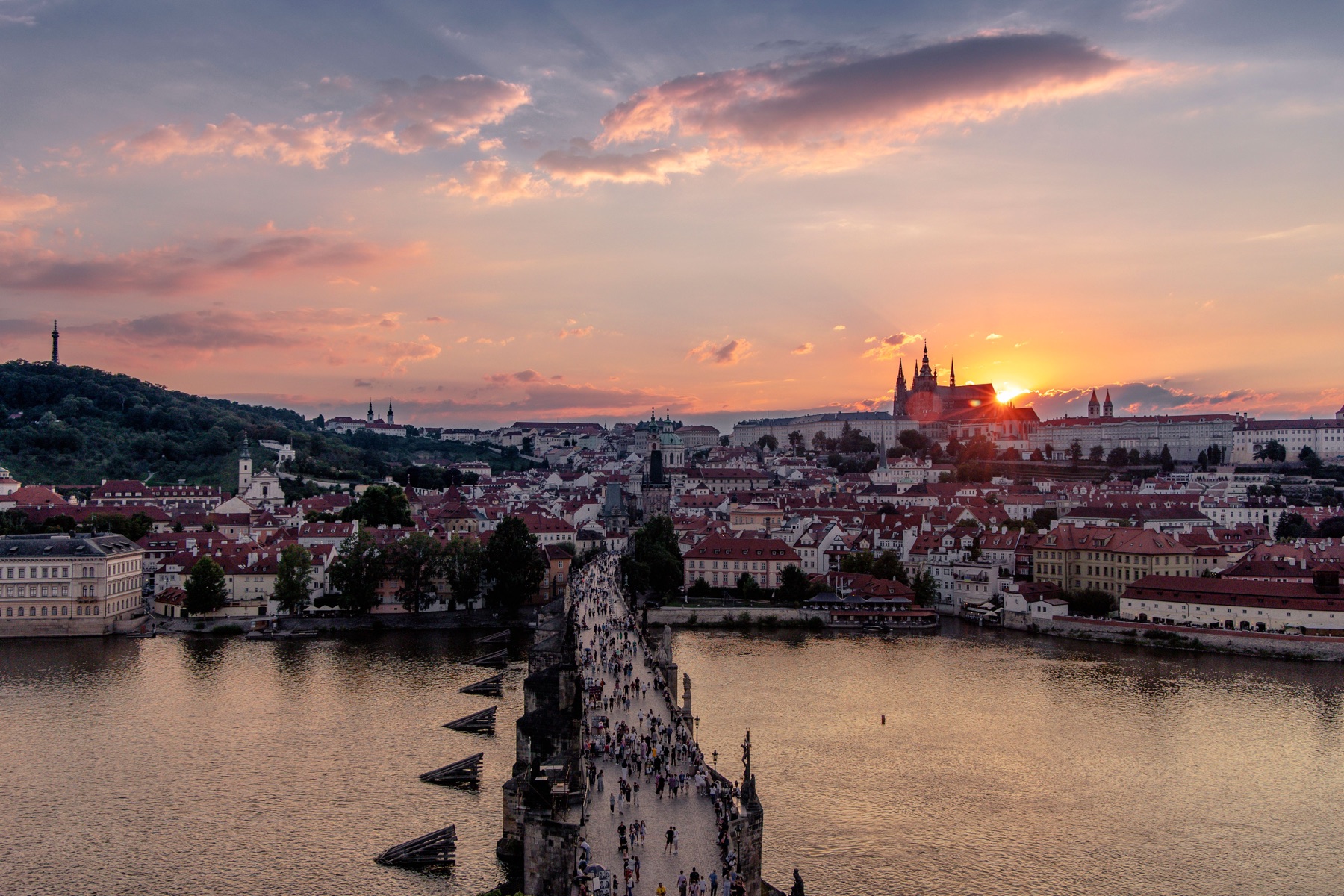
Prague rewards patience and careful selection, but it punishes shortcuts. The same EUR 250,000 that buys a compact one-bedroom or studio can also appear to buy a much larger “apartment” with a different legal status, weaker financeability or a renovation problem. Alexandra Kurbanova of Realtor in Prague explains why the legal definition, the building and the intended use matter more than the floor plan alone.
Prague’s false bargain starts with one extra room
A buyer searching Prague at around EUR 250,000 will often see two very different products. One is a small, legally conventional residential apartment. The other appears to offer more space for the same money. That second listing may be a genuine opportunity, but it can also be registered as a non-residential or accommodation unit, placed on a lower-ground floor, in need of major work or harder to finance.
This is the most useful way to read Prague in 2026. The city still benefits from scarce housing and deep demand, but investors are paying a high price for every square metre. The best purchase is not automatically the largest unit or the most famous postcode. It is the property whose legal status, layout, building condition and tenant pool support the price.
A strong market, with more selective buyers
Kurbanova’s advice is direct: buy if the purchase is comfortably affordable and the plan is to hold for the long term. Buyers are becoming more selective about location, condition and the type of property they will accept.
A property that is poorly priced or difficult to finance can still take longer to sell. Prague’s housing shortage supports the market, but it does not remove property-level risk.
Who is buying from abroad
Realtor in Prague works mainly with international clients, including many Russian-speaking buyers. Kurbanova says clients from Western Europe and Israel often buy for long-term investment or as a second home. Buyers from former Soviet countries are more likely to be purchasing for their own use.
The typical budgets she sees are around EUR 400,000 to EUR 600,000. That is important context. A EUR 250,000 investor is operating below the range in which many international buyers can choose freely among Prague’s established central districts. At the lower budget, the decision becomes a trade-off between size, address, condition and legal simplicity.
What EUR 250,000 means in practice
Kurbanova says EUR 250,000 can still buy a compact one-bedroom apartment or studio of roughly 35 to 45 square metres, depending on the location, building type and condition. In more affordable districts and older buildings, the buyer may find more space. In central or historic stock, the same capital may buy only a studio.
The PFC Property Investor Index 2026Q3 places Prague at about 38.0 square metres before buying costs. That benchmark sits inside the local range. It also shows why a listing that offers 50 square metres at the same price deserves more questions, not automatic excitement.
The Index estimates a 3.33 percent vacancy-adjusted gross yield, the lowest result among the 11 Index cities. This is before management, maintenance, tax and other ownership costs. Prague’s appeal is therefore less about high starting income and more about scarcity, tenant depth and capital preservation. The property still has to justify its purchase price.
Prague also ranks eleventh for 5-Year Investment Potential. That does not mean PFC expects prices to fall. It means much of the city’s strength is already reflected in a high starting price, so further growth must work harder to create an attractive investor return.
Prague in the PFC Property Investor Index
| Measure | Prague | Investor meaning |
|---|---|---|
| Current Investment Case | 10 of 11 | High prices and thin income weaken today’s entry case |
| 5-Year Investment Potential | 11 of 11 | Strength is already reflected in a high starting price |
| EUR 250,000 buying power | 38.0 m² | Smallest footprint among the 11 Index cities |
| Estimated gross yield | 3.33% | Vacancy allowed for, costs and tax not deducted |
| Mandatory entry-cost benchmark | 0.034% | Cadastre filing and certified signatures only |
| International Visitor Exposure | 99.79/100 | Strong global visibility, not a rental-return guarantee |
Low transfer friction does not mean zero buying costs
The Czech Republic currently has no property acquisition tax. In PFC’s standard Index case, Prague’s mandatory entry-cost benchmark is only 0.034 percent. That figure covers the cadastral filing and certified signatures. It does not mean the buyer’s complete transaction bill is almost zero.
Independent legal advice, an inspection, financing and buyer representation can still add costs. Some basic legal work may be included in the seller-paid agency commission, so the buyer should verify the exact scope.
The legal status can change the entire investment case
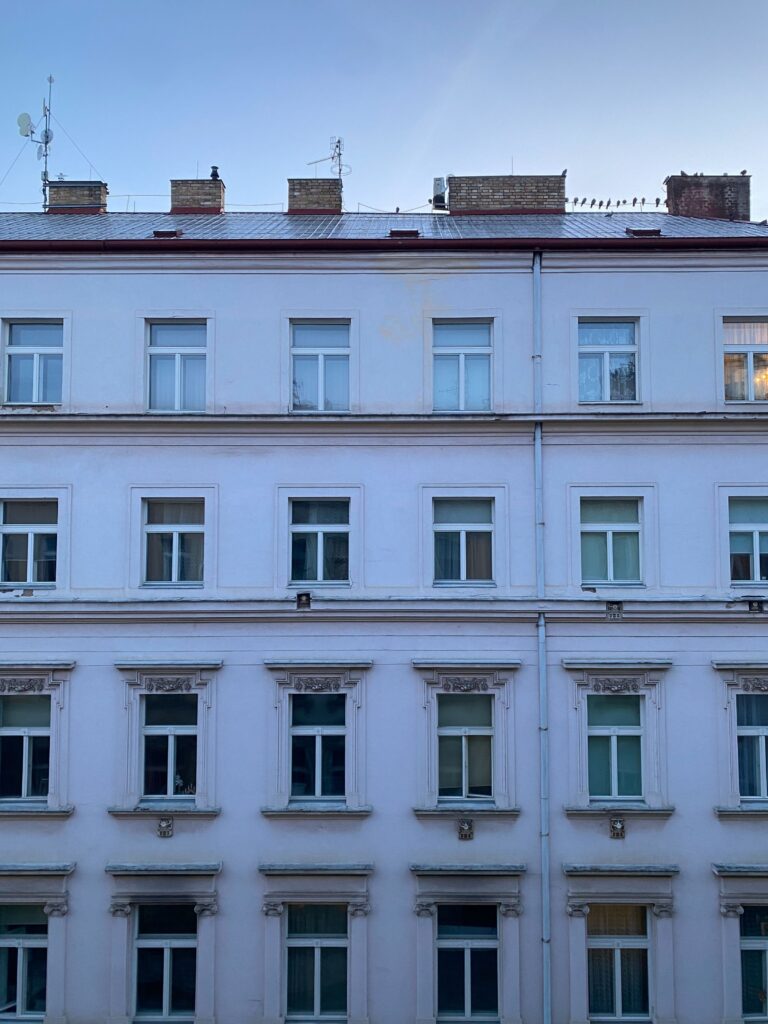
The issue Kurbanova sees most often is a unit marketed in the language of an apartment even though its official status is different. It may look and function like a home, but a non-residential designation can affect mortgage approval, residence registration, permitted use and the future buyer pool.
That is why a lower price per square metre can be misleading. The discount may be compensation for a narrower use, weaker financeability or a more difficult resale. A buyer should verify the cadastral record and approved use before comparing the listing with standard residential apartments.
Short-term rental is a use question, not a default right
Another common mistake is to assume that any Prague apartment can become a part-time home and an Airbnb when the owner is away. Short-term accommodation brings legal and administrative requirements, while Prague has continued to discuss tighter platform rules.
The practical lesson is simple. An investor should verify the current rules for the exact unit, building and intended use before buying. Tourist demand does not convert an ordinary residential property into an automatically compliant short-stay business.
Where a local specialist would begin
Kurbanova highlights three established areas for international buyers. They are starting points, not automatic recommendations. A single street, building or floor can materially change the investment case.
- Vinohrady. A lively residential district with transport, restaurants, schools and long-term appeal to both local and international tenants.
- Dejvice. An established area with strong everyday services, good connections and a durable residential reputation.
- Nové Město. Central access and a deep pool of amenities, with the higher prices and property-specific checks that come with historic stock.
These districts can hold value well when the wider market slows, but a EUR 250,000 buyer may face a smaller unit or a compromise on condition. More affordable neighbourhoods and older buildings can stretch the budget. They also make the exact transport link, homeowners’ association and planned building works more important.
What foreign buyers often misunderstand
The recurring problem is not a lack of information. It is the assumption that the buyer’s home-country process will apply in Prague. Contract practice, ownership records, financing, deposits and the role of the selling agency may all work differently.
A foreign buyer should establish the following before treating a listing as an investable asset:
- Legal use. Is the unit registered as a residential apartment, and does the planned use match that status?
- Building exposure. Are major façade, roof, lift or utility works planned, and does the homeowners’ association have adequate reserves?
- Financeability. Will the buyer’s bank accept the unit, the income source and the residency profile?
- Rental model. Is the intended long-term or short-term use permitted, practical and supported by evidence?
- Exit market. Will the same legal and physical features narrow the future buyer pool?
The next 12 to 24 months
Kurbanova expects slower price growth or a period of broad stabilisation over the next 12 to 24 months, rather than another sharp rise. She still considers a significant fall less likely because Prague continues to face a shortage of good-quality housing. However, very expensive or less attractive properties may remain near current price levels as buyers become more selective.
High prices and mortgage costs may keep some residents renting for longer, supporting demand for well-located long-term homes. Even so, a low starting gross yield makes overpayment difficult to repair through rent alone. The strongest case is a clean residential unit with an efficient plan, reliable transport, a healthy building and a price that leaves room for the real costs of ownership.
Alexandra Kurbanova’s advice to a first-time foreign buyer
“Do not assume that buying in Prague works the same way as it does in your home country. Find an experienced and trustworthy local professional who can explain the process clearly, then be prepared to rely on that local expertise.”
Alexandra Kurbanova, Realtor in Prague
The value of that advice is not that a buyer should stop asking questions. It is that the questions must be asked in the local legal and market context. In Prague, an attractive floor plan cannot fix the wrong registered use, and a famous district cannot compensate for an underfunded building or an unrealistic price.
Who Prague may suit
In PFC’s reading, Prague may suit a patient investor who values market depth, scarcity and long-term holding quality more than a high initial yield. It can also work for a buyer who wants personal use alongside investment value and is willing to accept a smaller property in exchange for a strong location and cleaner exit market.
It is less suited to a buyer who needs high cash income from day one, assumes short-term rental will be available, or chooses the largest apparent apartment without verifying its legal status. The PFC Property Investor Index and the local view point to the same conclusion: Prague can preserve value, but the margin for a lazy purchase is thin.
About the local expert

Alexandra Kurbanova is a Prague-based real estate specialist who helps international clients buy, sell and manage property in Prague. Realtor in Prague provides personalised, multilingual guidance throughout the transaction and ownership process.

Sources and scope
Local market observations and quotations: Alexandra Kurbanova of Realtor in Prague. Kurbanova provided the buyer profiles, typical client budgets, district starting points, practical cautions and 12-to-24-month market outlook. PFC figures and interpretation: PFC Property Investor Index 2026Q3, based on data collected from July to September 2026.
The Index’s mandatory entry-cost benchmark covers only the standard compulsory items in its model. It does not include optional legal advice, technical inspection, financing, buyer representation, renovation, furnishing or ongoing ownership costs.